YiFu Trading
Ceramic Flat Sheet Membrane for Wastewater Treatment
Rigid inorganic flat sheet membrane elements for challenging solid-liquid separation duties, sourced with application and export coordination.
Product overview
What is a ceramic flat sheet membrane?
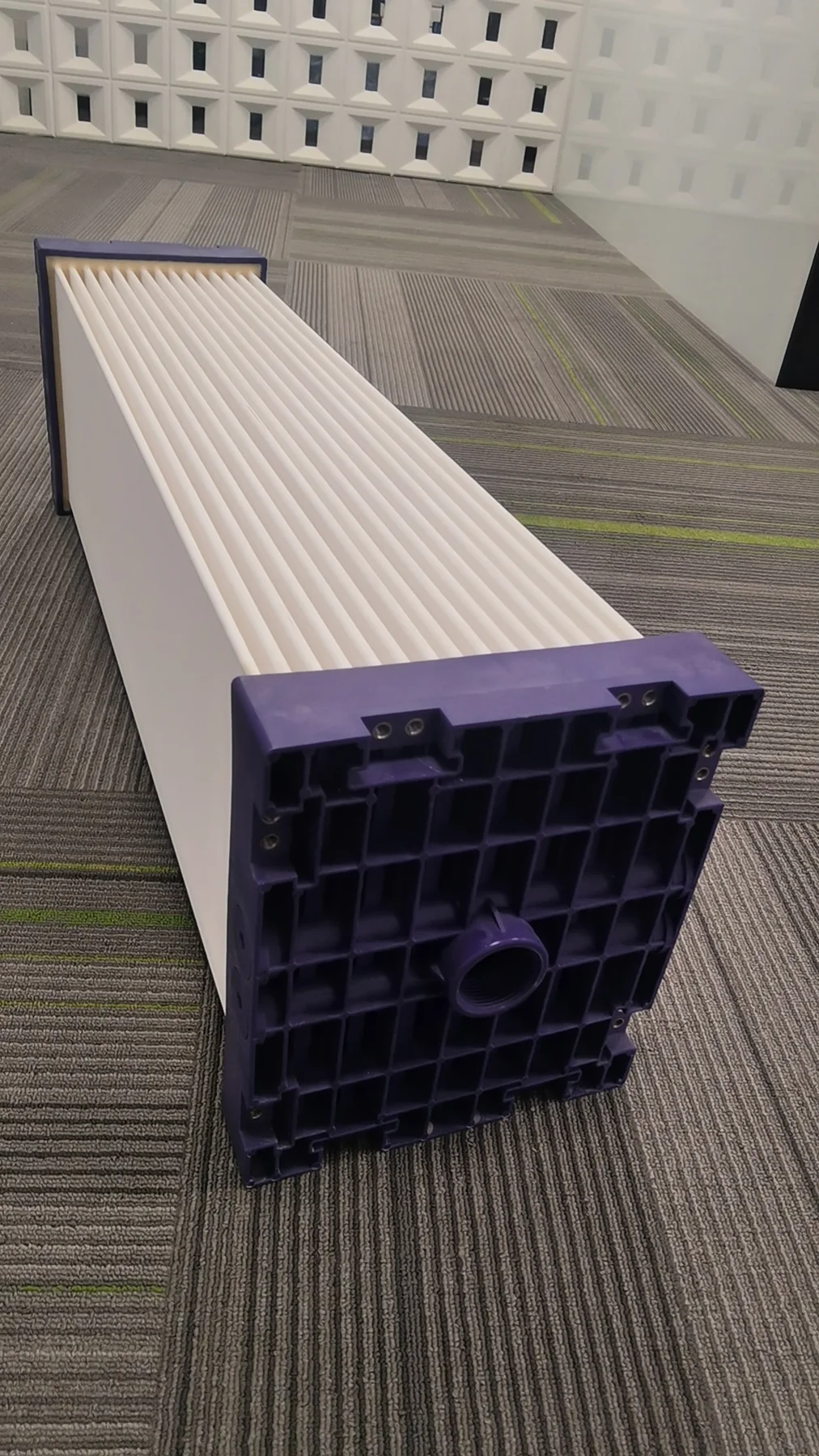
A ceramic flat sheet membrane is a porous inorganic filtration element formed as a rigid plate. In a suitable system, water passes through the membrane while suspended solids and larger contaminants are retained on the feed side.
It can be used in submerged or other configured membrane processes depending on the manufacturer, module design and application. The membrane does not replace upstream chemistry, biological treatment or downstream desalination where those steps are required.
Typical applications
Where ceramic flat sheet membranes may fit
Suitability depends on verified membrane material, pore size, module design, operating conditions and the complete treatment train.
Industrial wastewater
Solid-liquid separation after appropriate oil, chemical or biological treatment.
Mining water
Filtration of suspended mineral solids where scaling and chemistry risks are separately managed.
Ceramic MBR
Biomass separation as part of a biological treatment process.
Water reuse
A clarification or filtration step before advanced polishing processes.
RO pretreatment
Reduction of particulate load before RO; dissolved scaling and organics still require evaluation.
Replacement projects
Review against existing element size, module interface, aeration and hydraulic conditions.
Structure & configuration
Product structure and module options
Exact layer composition, support material, sealing details and connection geometry must be confirmed from the selected manufacturing partner.
Typical element structure
- Rigid porous ceramic support
- Separation layer appropriate to the specified pore size
- Flat sheet filtration surfaces
- Permeate collection interface
- Module frame and connection components
Configuration information needed
- Single element or assembled module
- Submerged tank geometry
- Membrane area requirement
- Permeate header arrangement
- Aeration and cleaning access
Product details
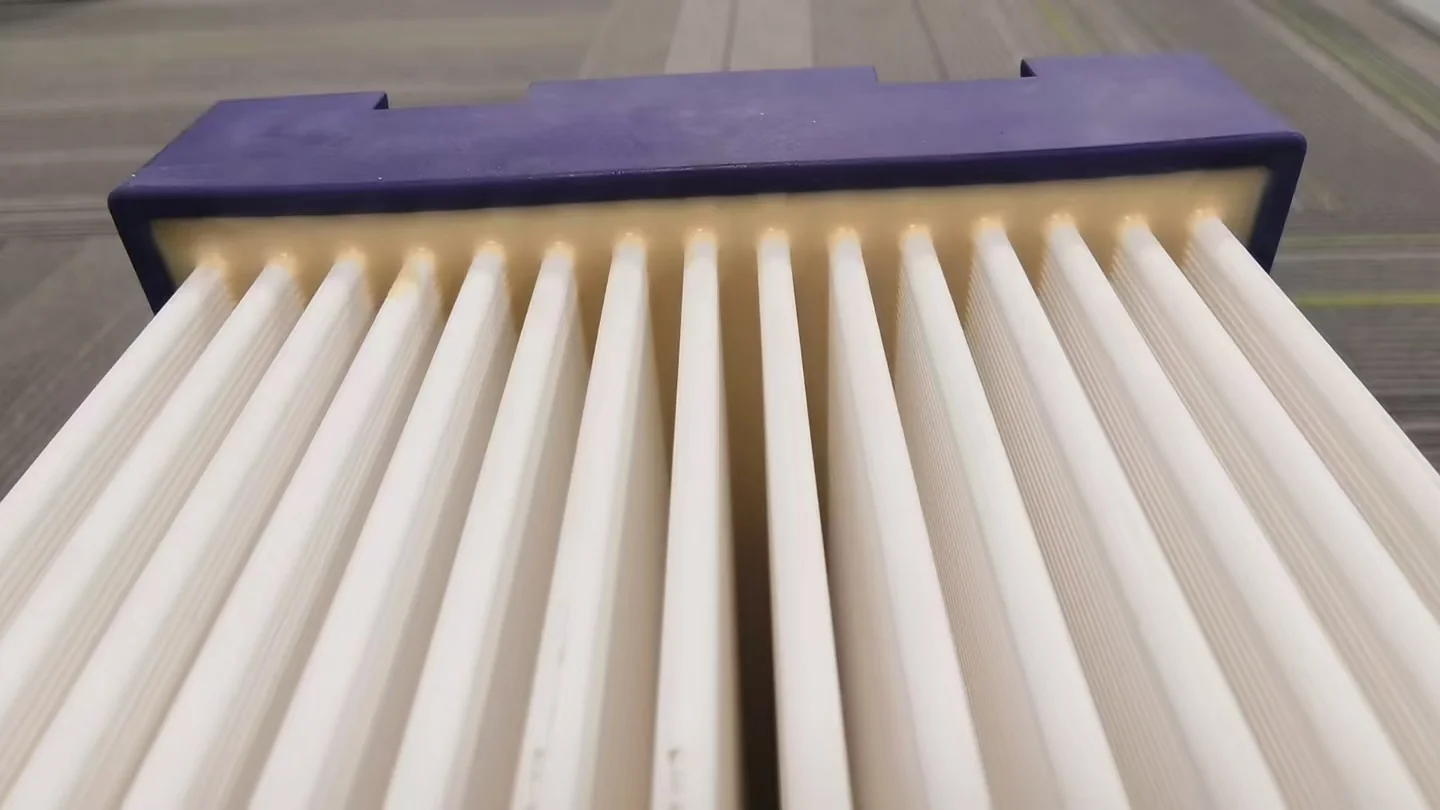
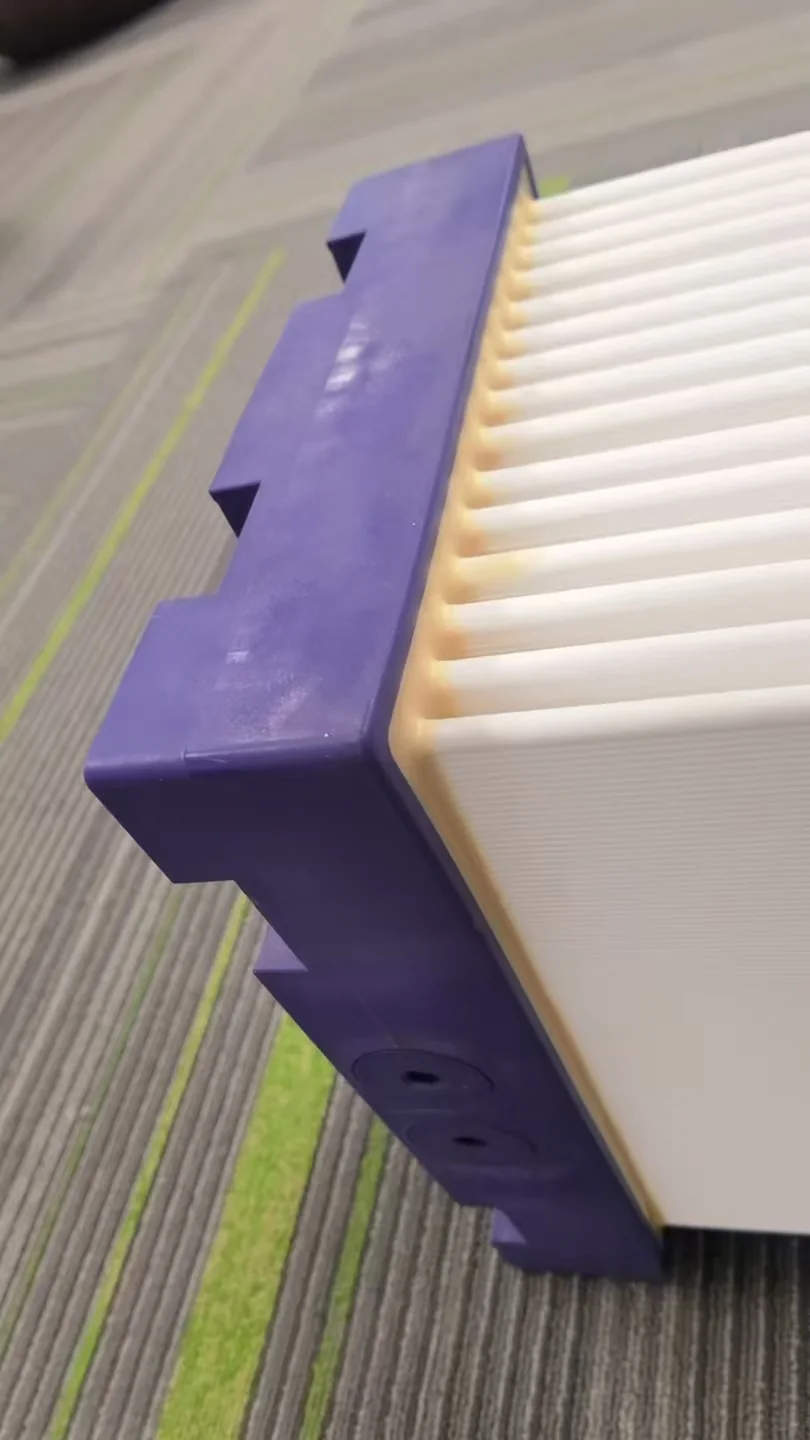
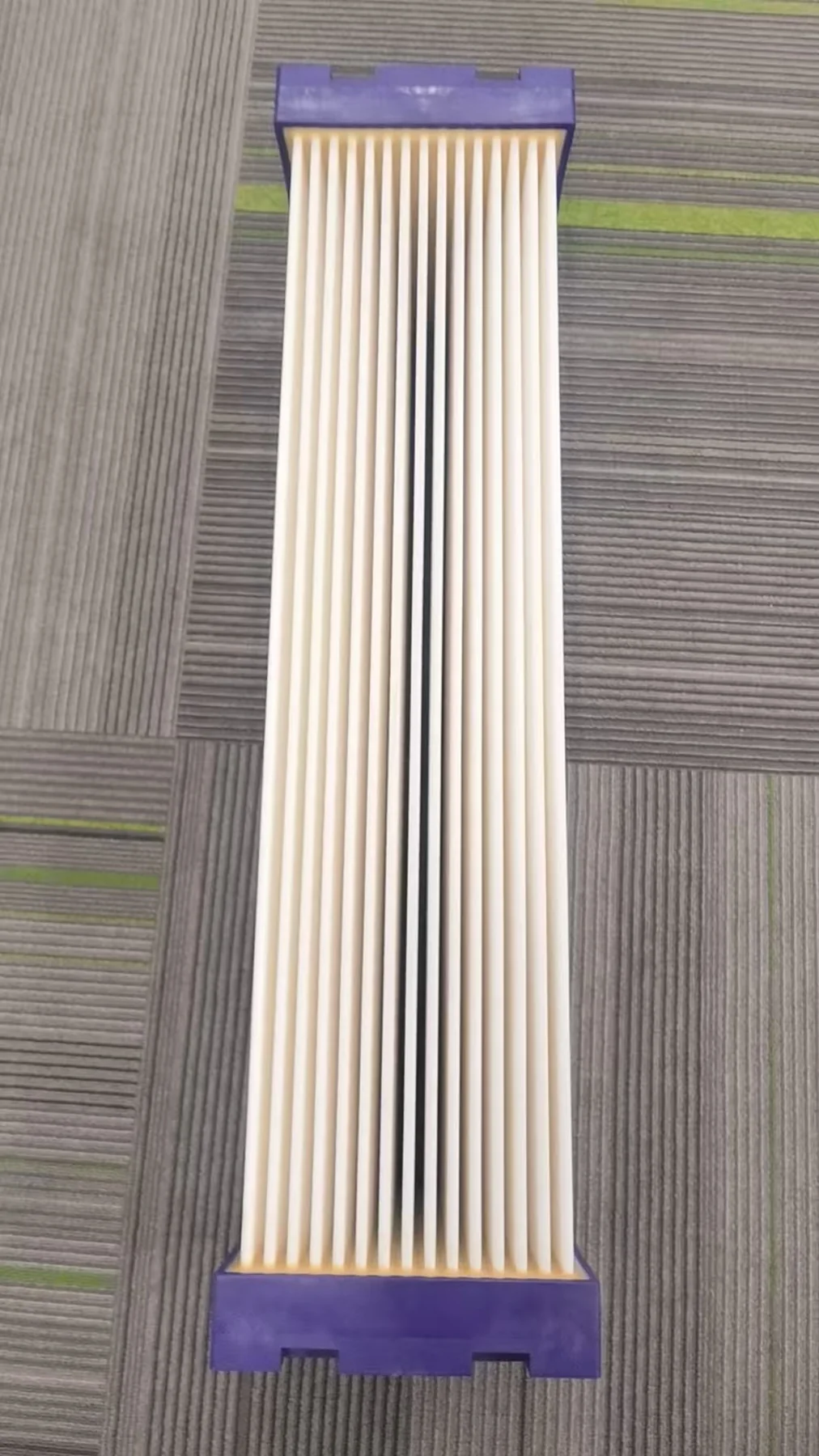
Real module and ceramic plate views
These images show the supplied YF-100-6 reference module. Final construction and interfaces must be confirmed against the selected model and current drawing.
Technical parameters
YF-100-6 reference specifications
Values below are taken from the supplied English brochure and are identified as manufacturing-partner reference data. Confirm the current datasheet, drawing and project-specific operating conditions before selection or order.
| Parameter | Reference value | Selection note |
|---|---|---|
| Model | YF-100-6 | YiFu model designation; confirm the current approved datasheet. |
| Membrane material | α-Al₂O₃ (alumina) | Confirm support and separation-layer composition for the final model. |
| Plate dimensions | 830 × 250 × 6.2 mm | Critical for replacement and module compatibility. |
| Plate area / weight | 0.4 m² / 1.94 kg | Reference values per ceramic plate. |
| Plates per module | 15 | Reference YF-100-6 configuration. |
| Module area | 6 m² | Confirm net installed area and quantity. |
| Module dimensions / weight | 935 × 230 × 280 mm / 32 kg | Verify tolerances, lifting and connection clearances. |
| Filtration mode | Negative-pressure suction | Operating sequence remains system-specific. |
| Reference operating pressure | -0.1 to -0.3 bar | Confirm instrument convention and allowable limits. |
| Reference clean-water flux | 300 LMH at 20°C and -0.2 bar | Clean-water test only; not a wastewater design flux. |
| pH range | 2–12 | Confirm continuous-operation and cleaning conditions separately. |
| Pore rating / temperature | Model-specific; confirm before quotation | Depending on the selected model and current datasheet. |
Process role
How the membrane may fit in a reuse process
Process note: This is a conceptual sequence. Actual treatment may require equalization, oil separation, pH adjustment, precipitation, biological treatment, oxidation, carbon, antiscalant or other steps.
Balanced comparison
Ceramic flat sheet vs organic membrane
| Consideration | Ceramic flat sheet | Organic flat sheet |
|---|---|---|
| Mechanical structure | Rigid inorganic support; verify impact and handling limits. | Polymeric construction may offer lower weight and different flexibility. |
| Chemical resistance | Can be broad for selected ceramics, but exact limits are product-specific. | Depends strongly on polymer, backing, potting and chemical concentration. |
| Cleaning | May allow robust cleaning within approved limits. | Cleaning must remain within polymer and component limits. |
| Temperature tolerance | Potentially higher for selected products; verify full module limits. | Often lower, with limits determined by polymer and module construction. |
| Capital cost | May be higher and requires lifecycle evaluation. | May offer lower initial membrane cost in many applications. |
| Best fit | Challenging duties where robustness and cleaning flexibility justify selection. | Many municipal and industrial MBR duties with established designs and economics. |
Neither material is universally better. The right choice depends on wastewater, lifecycle cost, operator capability, replacement strategy and verified supplier data.
Selection information
What to send for a membrane review
- Water source and industry
- Treatment capacity and operating hours
- TSS and particle characteristics
- COD and organic profile
- Oil content and emulsion condition
- Temperature and pH
- Target effluent quality
- Downstream process
- Existing treatment flow
- Current membrane model for replacement
Send the information you have
Incomplete data is common at the first inquiry. Mark unknown items and we will identify what must be confirmed before selection.
Send Your ApplicationFAQ
Ceramic flat sheet membrane questions
Is a ceramic flat sheet membrane suitable for every industrial wastewater?
No. Water chemistry, oils, dissolved salts, scaling potential, temperature, solids and treatment objectives must be assessed. Pretreatment or another separation technology may be more appropriate.
Can ceramic membrane directly remove dissolved COD or salts?
Not generally. A microfiltration or ultrafiltration ceramic membrane mainly separates suspended and colloidal material within its retention range. Dissolved organics and salts may require biological treatment, oxidation, adsorption, nanofiltration, RO or other processes.
Can ceramic membrane be used before RO?
Potentially, as a particulate-control step. RO pretreatment must also address scaling, dissolved organics, oxidants, biological fouling and the RO supplier's feed-water limits.
What data is required for a quotation?
At minimum: application, required flow, available water analysis, target quality, preferred module scope, delivery country and any replacement dimensions or drawings.
Does YiFu manufacture the ceramic membranes?
YiFu Trading works with qualified Chinese membrane manufacturers. We coordinate sourcing, application information, technical confirmation and export service; we do not present YiFu as the membrane factory.
Review your ceramic membrane application
Send water analysis, flow and process objectives for a preliminary discussion.